Wednesday, November 16, 2022

Six Books of Young Adult Fiction

Young Adult Fiction (YAF) is a category of writing for readers ages 12-18. The key characteristic of YAF is that the protagonist be a teenager. The themes are usually those of self-discovery, coming-of-age, figuring out the world and one’s role in it.  What is my purpose in life? What do I believe? Why am I here? Who am I?  The writing is in-the-moment as opposed to reflection or reverse chronologies.  The books I’ll discuss here are not current titles in YAF.  They are mostly nostalgia reading on my part.  By the way, 55% of YAF readers are adults.  I am not alone. 

First up, A Ring of Endless Light by Madeleine L’Engle (1980).  The protagonist is sixteen-year- old Vicky Austin, a sensitive and smart teen who writes poetry and is choosing among three very different suitors.  The story opens with the funeral of the father of one her suitors, Leo, a still-gawky but good-hearted adolescent. The next is Zachary, an urbane, rich boy.  Then there’s Adam who studies dolphins at the nearby Marine Biology Station for the summer.  Adam is college-age and suavely intellectual.  

The Austin family is also quite intellectual as well as refined and accomplished.  They read Shakespeare after dinner.  They sing together accompanied by their almost-professional mother on the guitar.  The oldest brother goes to MIT and Dad is a doctor doing research.  Grandfather is dying and he’s benevolent and patient, filled with the wisdom of the ages.  I felt overwhelmed by the lofty perfection.  

My introduction to Madeline L’Engle was A Wrinkle in Time in the 5th grade.  I loved the book.  As with that book, this book also has elements of the supernatural.  Although L’Engle’s overall message is one that reflects a tenderness for adolescence guided by traditional values and Christian teachings, I found unsettling her particular admixture of traditional and Christian with a New Age, sixth-sense-supernatural perspective.  This short bio of Ms. L’Engle explains her outlook well I think and helped me understand why she writes as she does.  While I can see the value in this book for some readers, it did not resonate with me at all nor would it have resonated had I read it at 16.  Vicky was likeable, but even at my advanced age, I still can’t imagine why anyone would want to swim with dolphins let alone talk to them.  That is just not real life.     

Next on the list are four books with a male protagonist. The Story of Mad Anthony Wayne by Hazel Wilson (1953) tells of the life and times of Revolutionary War hero, Anthony Wayne.  This is a volume in the Signature Books series by Grosset & Dunlap. Wayne is from my hometown area in southeastern Pennsylvania.  This book is well-written and takes us through Wayne’s childhood, military career and later life. This is an excellent and thorough biography of a man who exhibited fire and courage and love of country.

Adam of the Road (1942) is by Elizabeth Janet Gray whom I’ve written about here. This is a father-son story set in late 13th century England.  Eleven-year-old Adam is separated from his minstrel father, Roger, about midway through the book. Adam’s literal search for his father is a spiritual sort of search for himself.  Adam loves and reveres his father and wants also to be a minstrel. This book of historical fiction is not heavy on plot, but there are good guys and bad guys along the way.  There is challenge and adventure and plenty of information about the era (the book could have used a glossary for all the medieval vocabulary). The story is charmingly told and has an important message about fathers and sons.  The last words of the book are Roger speaking to Adam.  “You have done well, son.”  What young man would not want to hear those words from his father.

The Sign of the Beaver (1983) is written by Elizabeth George Speare.  Here is young Matt, about to turn 13, left to mind the family’s new frontier cabin and property while his father goes back to civilization to pack up the household and then return to the wilderness with the rest of the family. The year is 1769 or so and the setting is Maine. Like My Side of the Mountain, this is a wilderness survival tale, but Speare is more clearly intent on presenting a coming-of-age story.  Matt grows up by developing the virtues of loyalty and courage.  He learns about himself and the world through friendship with others. Matt perseveres and his father’s words to him at the end of the book are: “You’ve done a grown man’s job, son.   I’m right proud of you.”  More words for young men to grow on.

Sam Gribley is another young man on a journey of sorts. The book is Jean Craighead George’s My Side of the Mountain (1959).  Sam runs away from home, which is an apartment on Third Avenue in NYC, and lives off the land in the Catskills.  His home away from home is a large hemlock tree.  He hunts, fishes and gathers based on an encyclopedic knowledge of the flora and fauna of the woods.  To keep warm and cook, he constructs an indoor fireplace.  He sews his clothes from animal furs and skins. He befriends weasels and raccoons, and he raises and trains a hawk. Sam doesn’t get fleas or even mosquito bites and he is only sickly once.   Whew! 

The author clearly knows whereof she speaks when describing wilderness survival. She offers some explanation of her knowledge in the introduction.  The illustrations of plants and objects are her own. Yet, while it’s an engaging story, it was entirely unbelievable to me, fantasy without a purpose.  I simply could not relate. Despite the author’s introductory remark that there is a universal kid-desire to run away from home, I never even remotely considered such an awful thing. 

Maybe this is more of a boy’s passage-into-manhood book.  Young Sam certainly does very manly things and exhibits a lot of gutsy confidence to spend so much time all alone with forest animals, snowstorms and passing strangers.   I won’t give away the ending except to say that Sam’s father is more of a 60s kind of free spirit.     

I’ve saved the best for last.  In my opinion, everyone should read The Bronze Bow by Elizabeth George Speare (1961).  The author has ingeniously and succinctly explained what it means to be a man (and indirectly a woman) and to follow Christ.  That’s a pretty tall order for a work of YAF.  The setting is the Holy Land in the year 30 AD or thereabouts.  Jesus is one of the characters in the story as is Simon the Zealot who will become one of Christ’s twelve apostles.  The protagonist is Daniel, a Jew of probably 15 to 18 years of age, whose rage against the Romans along with his expectations of the coming Messiah have driven him to an outlaw’s life.  Daniel has a choice to make as to what kind of man he will be and how he will fight for freedom.  There’s action and suspense right up to the end.  In fact, I became quite agitated reading the last ten pages as I awaited Daniel’s choice. 

I read this as a younger self not knowing much about the life and times of Christ. Nonetheless, Speare’s young protagonists and their concerns must have emerged to me as understandable and genuine. Their thoughts and dilemmas must have drawn me in.  The inclusion of Jesus as a walking, talking character in the narrative must have brought the past into the present and, again, I was drawn in.  So it was this time reading as an adult.  Ms. Speare is a wonderful writer. 

I hope you'll choose from among these titles to read for yourself or pass along to kids and grandkids.  


Video Number 7

Hope you'll tune in my next video, Number 7, with special guests!  Link is below:  

Reading History No 7@Amy Shelflife - YouTube

Friday, September 30, 2022

Reading History Video No.6

Upstairs at my parents' house
In this video, I chat about a website named Reshelving Alexandria and a couple other topics as well.  I hope you have a few minutes to pull up a chair and watch.  Reading History No.6 - YouTube


Monday, August 22, 2022

Henry VIII The King and His Court by Alison Weir

Another English historian has proved dry and lackluster. Alison Weir has tons and tons of detail in this biography of Henry the VIII (1491-1547) but very few summations or discussions of overarching themes that define Henry’s era and his reign.  The reader is on one’s own to read and read and read and infer from the details what the core ideas might be. Weir writes in a chronological style, shares little to no opinion of her own, is only occasionally enthusiastic about her subject and supplants imagination with abundant detail. We read and read and read but, I do repeat myself. Actually I often didn’t read.  I did a lot of skimming. 

Henry VIII, whose reign extended from 1509-1547 is of course known for his six wives and his role in establishing the Church of England.   The book did dig in a bit where the wives were concerned and provided a closeup view of each and the sort of relationship each had with Henry.  I was glad to read that his first wife, the beleaguered Catharine of Aragon--oops that’s Katherine with a “K” for the Brits--was not as forsaken and ill-treated as I had thought.  She and Henry did have some good years together during which there was a fondness and attachment.  

Of the six wives, I found the last Katharine, Katharine Parr, to be of particular interest at least in part because her queenship reflected the progressive vs. conservative religious tension of the day.  Katharine Parr was something of a thinker and activist, a participant in the controversies of the day. She wrote and published at least two books about prayer.   She had about her a group of like-minded women among whom was perhaps Anne Askew, a Protestant who was eventually arrested and tortured on charges of heresy.  Katharine also fell solidly into the progressive/Protestant camp but, like Henry himself and so many other members of the court, Parr was outwardly Catholic.  Though not necessarily due to her connections with Askew, conservatives of the court suspected Katharine of heresy and issued a warrant for her arrest on charges of the same. Henry rather unwittingly gave his signature to the warrant, but nothing came of it.

 As for Henry himself? Ms. Weir credits Henry VIII with a long list of accomplishments---founding The  Church of England, advancing parliamentary government, enriching the “standing” of the monarchy, guiding England “courageously through a religious revolution,” and reconstructing “the machinery of state.”  He was a lover of art, he “created the most magnificent court in English history” and he “took England from medieval to modern.”  Quite a resume for a man who could scarcely bury one wife before marrying the next.     

Any accomplishments of Henry VIII’s reign are vastly overshadowed by his central interest---himself.  I would describe him as impulsive, self-absorbed and self-indulgent. He lacked leadership ability and was not as a rule particularly compassionate or kind. Though said to be intelligent and even scholarly, he seemed unaware that his actions were sowing the seeds for the death of the Catholic faith in England and the division of Christendom in Europe. He also failed in a large way to appreciate that his rejection of papal authority was diametrically opposed to his identity as a Catholic. Henry VIII persecuted his share of Protestants while he also presided over the destruction of the Catholic monasteries, the Annates Act of 1532 (which re-directed taxes paid to the Vatican to Henry instead) and The Act of Supremacy of 1534 which clinched the separation of England from the Church of Rome. Yet he died a “Catholic” with his burial mass given by Bishop Gardiner, the more conservative Catholic wing of the religious controversy.  

Ms. Weir writes that history has typically portrayed Henry VIII as an ogre who killed his wives and mis-treated his subjects, but such should not be our conclusion.  Given the “wealth of modern research” we can now see the “charisma” of the real Henry VIII who so capably reigned.  With all due respect for Alison Weir’s extensive scholarship, I go with the outdated Henry-as-ogre. At the end of the day, Henry VIII was a shallow man, an uncaring father, a fickle husband and a feckless leader. 

Reading History No 5 Video

Late Summer Clouds
Here’s the link to my most recent video. I’m branching out a bit to topics other than reading history and I’ll also be having specially chosen guests! 

In the video I mention the author Elizabeth Janet Gray Vining. Besides retiring in my hometown of Kennett Saure, PA, Mrs. Vining was a very remarkable woman who wrote a book about her years as English tutor to the Crown Prince of Japan after WWII.  Here is my commentary on Mrs. Vining’s book.

Thursday, July 14, 2022

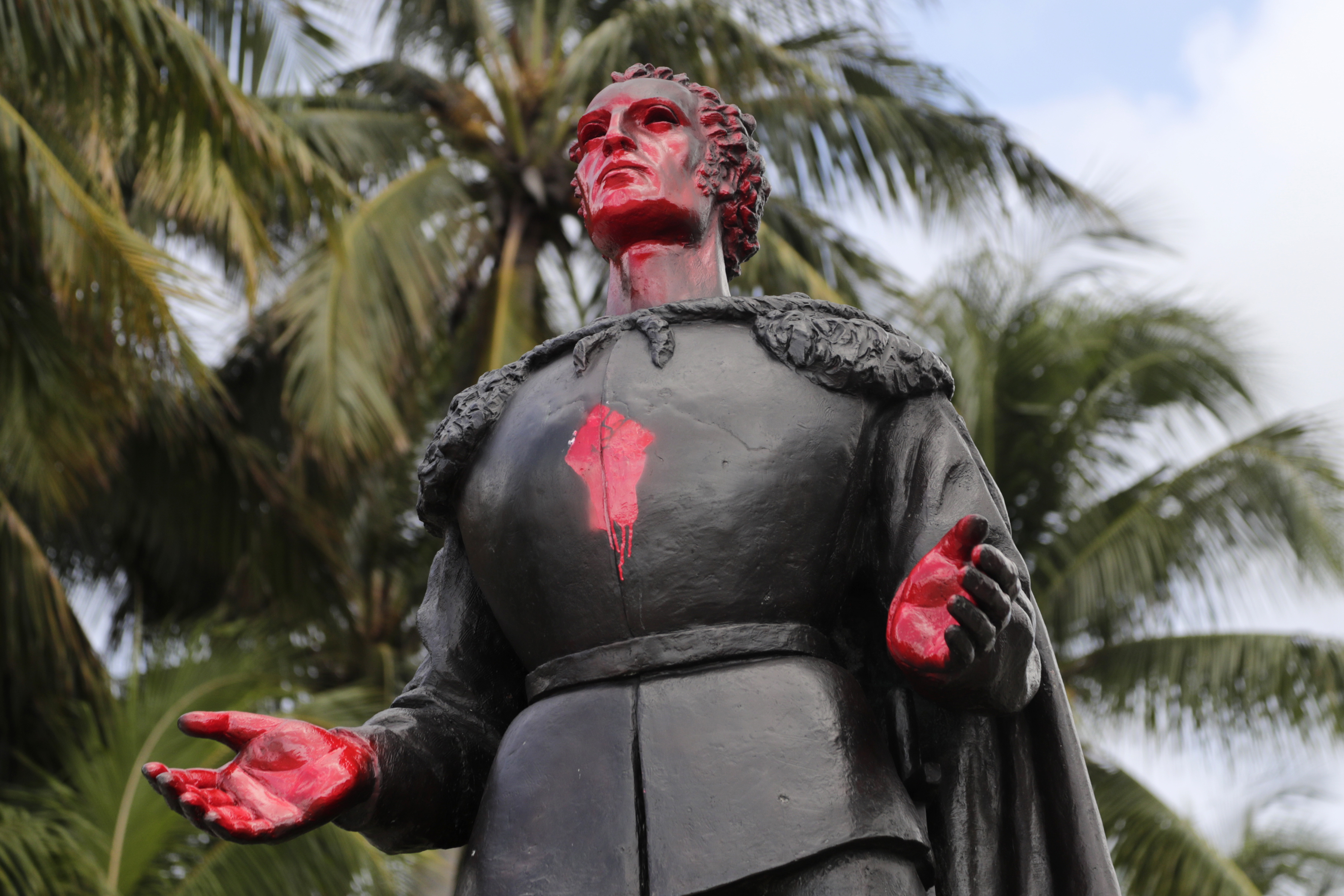
Columbus and The Crisis of The West by Robert Royal

We know who Columbus is but what is the crisis of the west?  Or The West?  This book examines the vilification of Columbus and the “woke” notion that Western Civilization is racist, evil, exploitative and garbage.  It’s a notion that’s been around since the 60s of course but is enjoying a rebirth of freedom now.  

Robert Royal, academician and Catholic writer extraordinaire has tackled the attacks on Columbus and the contributions of Western Civilization to the development of the modern world.  There’s a lot of information in this book plus good arguments in the defense of Columbus and Western Civilization.  Mr. Royal’s information on Columbus and the Spanish empire in the New World is accurate and unbiased.  He certainly does not whitewash either.  

The book is difficult. It reads like a compilation of speeches or articles with added text to attempt a coherent whole.  Royal’s writing is, not surprisingly, academic in style.  It’s a bit abstruse.  The analysis is nuanced and detailed with long sentences and the occasional choice of word that clogs up the understanding. Any number of times I found myself thinking, Why doesn’t he just say what he means and let’s get on with it. I had thought I might go back and unravel the chapters a bit.  If I ever do that I will also undertake better note-taking in the margins.  

There is valuable information in this book if you feel called upon to defend Columbus as a bold explorer, an accomplished mariner and an essential historical figure who was central in ushering in the modern age.  

Also read Samuel Eliot Morrison’s Admiral of the Ocean Sea:  A Life of Christopher Columbus. I really liked that book. 

Reading History No. 4 and Related Links


Here is the link to my July 4th Reading History video:

Reading History No. 4 - YouTube

Here are some related links!  

 This is a list of all 185 books in the Landmark Series:

http://cherylbastian.blogspot.com/2013/07/landmark-books-in-chronological-order.html

Two good articles about Landmark Books:

http://www.historians.org/publications-and-directories/perspectives-on-history/october-2016/generation-past-the-story-of-the-landmark-books

Landmark Books – First-Rate History Series for Readers and Collectors | Old Scrolls Blog (wordpress.com)

Exodus Books is a good website for shopping and learning: 

Landmark Reprints - Exodus Books

Landmark Giants - Exodus Books

American Landmark Books - Exodus Books

Childhood of Famous Americans - Exodus Books

Here are two links on the 1619 Project: 

The 1619 Project - The New York Times (nytimes.com)

Pulitzer Center: 1619 Project (1619education.org)